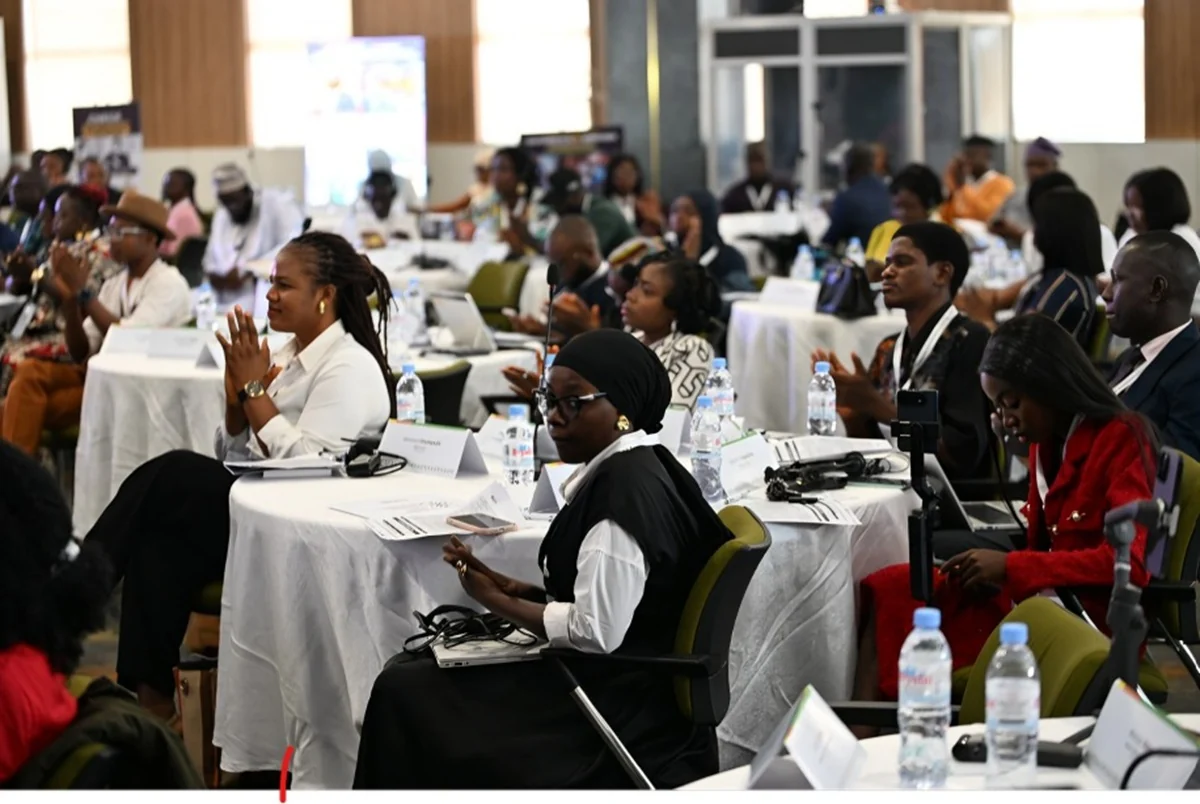
The Fundación para la Internacionalización de las Administraciones Públicas (FIAP), in collaboration with FactCheckAfrica, has convened a two-day regional forum in Abuja to discuss electoral disinformation and develop coordinated responses ahead of upcoming elections in West Africa.
The International Multi-Stakeholder Forum on Disinformation in Electoral Contexts in West Africa, held from November 24 to 25, 2026, at Lake Greenfield Hotel, Kado, Abuja, brought together fact-checkers, journalists, civil society organisations, electoral stakeholders, technology experts and youth representatives from Nigeria, The Gambia and Benin.
Organised under the EU Support to ECOWAS in Peace, Security and Governance (EPSG) Project, the forum examined threats to electoral information integrity, including cross-border disinformation, the use of local languages to spread misleading narratives, artificial intelligence-generated content and the challenges of verifying information before it spreads widely.
The meeting comes ahead of The Gambia’s presidential election scheduled for December 5, 2026, and Nigeria’s 2027 general elections, among other electoral processes across the region.
It also brought together organisations that have been implementing interventions throughout 2026 to strengthen electoral information integrity in Nigeria, The Gambia and Benin.
Speaking at the opening ceremony, the Chief Press Secretary to the Chairman of the Independent National Electoral Commission (INEC), Mr Dayo Oketola, who represented the Commission’s Chairman, Prof. Joash Ojo Amupitan, said INEC had established verification mechanisms to prevent misinformation from undermining the credibility of elections.
He highlighted the commission’s automated verification system and its engagement with the National Orientation Agency, civil society organisations and fact-checking groups as part of efforts to improve electoral information management and public confidence.
ALSO READ: Nigeria’s $54bn external reserves cover 10 months’ imports
Founder of FactCheckAfrica, Abideen Olasupo, raised concerns about the use of indigenous languages to manipulate public understanding and spread misleading electoral narratives.
He described the practice as “hyper-local manipulation”, explaining that disinformation actors increasingly exploit local languages and community information networks to reach audiences.
Representatives of the European Union, Spain and Denmark called for stronger regional cooperation to address electoral misinformation. The Head of Cooperation at the European Union Delegation to Nigeria and ECOWAS, Mr Massimo De Luca, highlighted its direct and indirect effects, including its possible influence on Nigerians living in the diaspora.
The Ambassador of Spain to Nigeria, Mr Félix Costales, stressed the importance of fact-checking in protecting electoral integrity but cautioned against measures that could undermine media freedom and legitimate public debate.
“The fight against misinformation should not be a weapon against legitimate debates,” he said.
The Deputy Head of Mission at the Embassy of Denmark, Mrs Julie Rosenkilde Hannibal, reaffirmed her country’s support for the EPSG Project and emphasised the importance of locally led responses to regional challenges. “Denmark is very proud to be part of the EPSG. We believe in regional solutions to regional challenges. Peace, security, and good governance in West Africa are best strengthened by you, the West Africans, with us proudly standing beside you,” she said.
Delivering a keynote address titled Beyond Fact-Checking: Building Systemic Media and Information Literacy Infrastructures Across West Africa, Dr Sharon Omotoso, Director of the International Media and Information Literacy Institute (IMILI), discussed the personal and societal effects of misinformation, particularly coordinated gendered disinformation that can undermine women’s public credibility and discourage their participation in politics.
Omotoso called for expanded fact-checking capacity and urged media organisations to verify names and other identifying details before publishing information about individuals. She also stressed the importance of editorial independence and warned against the politicisation of fact-checking.
Another highlight of the forum was the launch of Elect Peace, a digital platform developed by Dataphyte Foundation to connect civil society organisations, fact-checkers, training resources and open-source verification toolkits across West Africa.
Presentations and panel discussions featured representatives of FactCheckAfrica, Banouto and Gambia Participate, who shared experiences from interventions in their respective countries. A virtual keynote address by Enock Nyariki, Communications Manager of the International Fact-Checking Network (IFCN), examined global fact-checking standards and cross-border collaboration in electoral systems.
Other speakers included Mustapha Lawal of FactCheckAfrica, Olivier Ribouis of Banouto, Marr Nyang of Gambia Participate, Samad Uthman of Agence France-Presse (AFP), Khadijat Tijani of GirlByte, Leonce Gamai of Banouto and Omar Camara of Info Checked.
Their discussions covered artificial intelligence, platform accountability, global fact-checking approaches and the challenges of applying them in West Africa.
On the second day, participants examined AI-generated and synthetic media, verification of claims in local languages, technology platform accountability and the safety of journalists, fact-checkers, women and other civic actors during elections.
A panel moderated by Halimat Olufade of Brain Builders Youth Development Initiative featured Aluko Ahmad of the Centre for Democracy and Development (CDD West Africa), Yusuf Liadi of iLEAD AFRICA and Ansumana Ceesay of Gambia Participate.
Participants also took part in working groups focused on civil society and fact-checking networks; media, broadcast and journalism standards; electoral management bodies and regulatory agencies; and technology platforms, academia and international partners. Their deliberations informed the development and review of a Regional Action Plan on Electoral Disinformation and a Participants’ Communiqué, which were presented for plenary consideration and scheduled for formal adoption during the closing ceremony.
The forum was organised under the EPSG Project, which seeks to strengthen democratic governance, promote information integrity and address misinformation and disinformation in electoral contexts across West Africa.
The project is supported by the European Union, the German Federal Ministry for Economic Cooperation and Development (BMZ) and the Ministry of Foreign Affairs of Denmark (MOFA), and is jointly implemented by GIZ, Expertise France and FIAP.
WATCH TOP VIDEOS FROM NIGERIAN TRIBUNE TV
