Follow THISDAYLIVE on GoogleAdd us as a preferred source to see more of our stories in Google
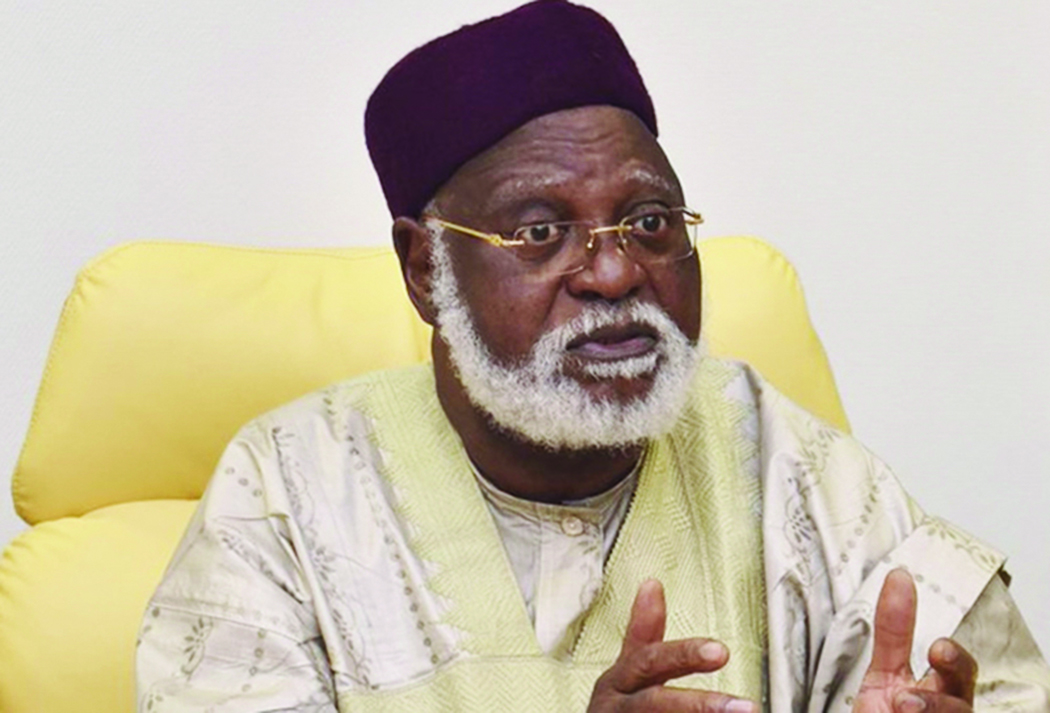
With the widespread attacks sponsored against political opponents by some political leaders who fear they might lose the 2027 elections, Ejiofor Alike writes that the retired General Abdulsalami Abubakar-led National Peace Committee should call political actors to order to save Nigeria’s democracy
President Bola Tinubu received a dose of the political violence spreading across the country ahead of the 2027 general election when his motorcade was attacked on Friday, November 13, 2026, at a mosque in Garki District, Abuja, shortly after the President observed Jumu’ah prayers.
According to the Federal Capital Territory (FCT) Police Command’s spokesperson, Josephine Adeh, as the president’s convoy was leaving the area, some individuals attacked the convoy with stones and other dangerous objects, damaging several vehicles and causing injuries to some security operatives.
However, Adeh disclosed that the 78 suspects arrested over the incident were to be released following the President’s extension of clemency to them.
The police statement was the first official acknowledgment of the attack on Tinubu’s convoy.
The video of the incident, which went viral, captured some of the youths chanting “Ba ma yi, ba ma so,” an Hausa expression meaning “we don’t want you; we don’t support you.”
Few hours after the attack, President Tinubu issued a statement, condemning what he described as the rising cases of violence at political events across the country, warning that all political parties and candidates must enjoy equal protection and the freedom to campaign anywhere in the country without harassment or fear.
Before the attack on the president, the opposition parties and their leaders were the main targets of attacks.
Reacting to Tinubu’s statement in a post on X, the presidential candidate of the African Action Congress (AAC), Omoyele Sowore questioned why Tinubu did not condemn previous incidents of political violence.
Following the widespread attacks on opposition parties and their leaders, the National Leader of the NDC, Senator Seriake Dickson, had recently called on the National Peace Committee (NPC) led by a former military Head of State, General Abdulsalami Abubakar (rtd.), the Independent National Electoral Commission (INEC) and security agencies to convene an all-party summit to address rising political violence ahead of the 2027 general elections.
Dickson warned that the increasing attacks on NDC members, candidates and supporters could undermine the credibility and peaceful conduct of the elections if urgent steps were not taken to contain the situation.
The National Peace Committee had earlier raised concerns over rising political tensions and warned President Tinubu, Atiku, Obi, and other political actors against inflammatory statements and incitement ahead of the 2027 polls.
The committee had also raised the alarm over 60 election-related incidents recorded across the country within one month.
Worried by the spread of violence, a chieftain of The Alternative and a key promoter of President Tinubu’s re-election bid, Segun Showunmi, had urged the National Security Adviser (NSA), Mallam Nuhu Ribadu, to establish clear boundaries for political conduct and ensure that individuals who threaten national security are held accountable, irrespective of their political affiliations.
Showunmi, who made the appeal in an open letter to Ribadu, warned that inflammatory political statements, ethnic and religious insinuations, threats and the manipulation of sensitive national issues for political advantage could worsen Nigeria’s security challenges.
He warned that political status, public office or proximity to powerful interests should not be treated as immunity from the consequences of unlawful conduct.
Political analysts believe Sowunmi’s letter to Ribadu was timely following the increasing attempts by some political actors to exploit the country’s ethnic fault lines for electoral gain.
The Minister of Aviation and Aerospace Development, Mr. Festus Keyamo, was recently accused of attempting to exploit ethnic insinuations, and manipulation of the sensitive issue of secession for political advantage against Obi.
This followed an accusation by the minister that Obi and the members of NDC, sang the old National Anthem at the recent town hall meeting held by the party in Lagos.
Keyamo, in his verified Twitter (X) account, said that by refusing to sing the new national anthem, Obi and his group might be planning to break away from Nigeria.
But Obi’s supporters argued that both old and new national anthems pay allegiance to Nigeria.
Reacting in a post on her X, a chieftain of the NDC, Aisha Yesufu, accused the ruling APC government of attempting to use the secession narrative to discredit Obi.
Yesufu dismissed Keyamo’s narrative, insisting that the attempt to portray the NDC or its supporters as separatists would not change the political mood ahead of the 2027 elections
Former President Goodluck Jonathan had also issued a stern warning to Nigerian political actors and citizens, cautioning that weaponising ethnic rivalry and political intolerance would pose a severe threat to the country’s survival.
Speaking on November 17, 2026, at a high-level peace and security conference hosted by the Goodluck Jonathan Foundation in Abuja, the former leader stressed that politicians must refrain from exploiting ethnic fault lines for electoral gain, noting that democratic stability relied on shared national unity.
He warned that undermining national cohesion for political ambition would pose a severe danger to the country’s existence.
But in its reaction to the nationwide violence, the APC Presidential Campaign Council accused the ADC and the NDC of sponsoring violence and deploying young Nigerians to disrupt its campaign activities.
The council alleged that the opposition parties were using hoodlums, artificial intelligence-generated images, deepfakes, fake news and sponsored protests to create tension, manipulate public opinion and discredit President Tinubu and the APC.
In a press statement issued last Tuesday, and signed by its spokesperson, Mr. Dele Alake, the council recalled that it had warned Nigerians ahead of the flag-off of its presidential campaign rally in Kaduna on October 24 about alleged plans by opposition elements to introduce violence and disharmony into the campaigns.
It claimed that the alleged plots were beginning to unfold, accusing the ADC and NDC of sponsoring groups of hoodlums to disrupt APC rallies with cudgels and banners while chanting “Bamaiyi” in an attempt to portray widespread public discontent against the president.
The council cited the recent incident at an Abuja Mosque, where it alleged that some of the sponsored thugs pelted the presidential motorcade with stones.
The APC campaign council also expressed concern over alleged attacks and threats against its members and supporters in the South-east, claiming that some had been labelled ‘saboteurs’ for refusing to support Obi.
The council maintained that no political party or candidate should be denied access to the democratic space in any part of the country.
On its part, the Senate recently called on INEC to disqualify any political candidate whose supporters are found to have instigated or participated in electoral violence, irrespective of party affiliation.
The upper chamber also urged state governors to stop denying opposition parties access to public facilities, hotels and stadia under their control for political activities.
Electoral violence and political impunity contributed largely to the collapse of civilian administrations in the past.
To save the current democracy from collapse, the Abdulsalami-led committee and other elder statesmen should caution political actors.
