Follow THISDAYLIVE on GoogleAdd us as a preferred source to see more of our stories in Google
Adeola Akinremi
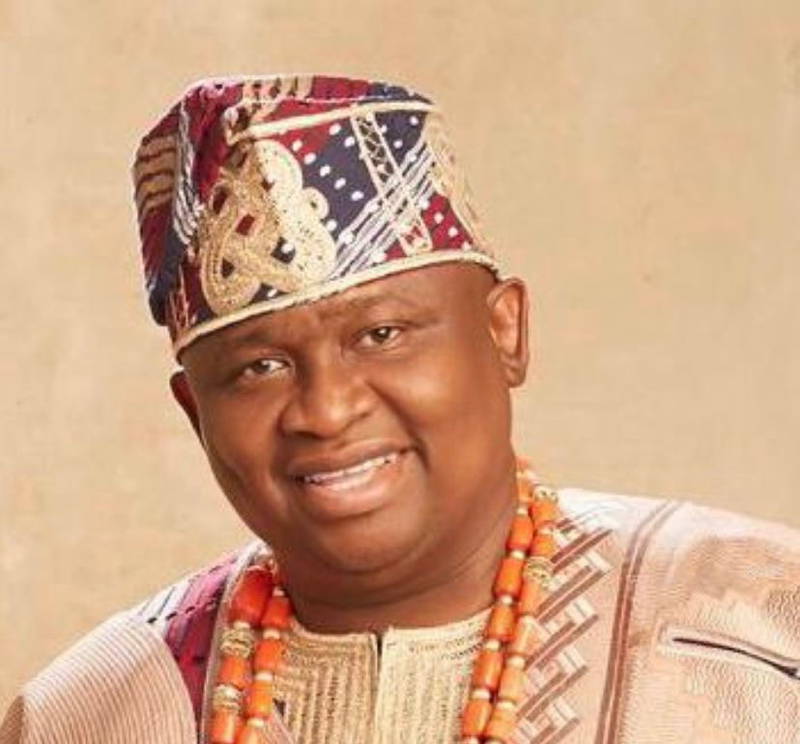
As it stands, Senator Solomon Adeola’s clear mandate from voters, as the All Progressives Congress (APC) governorship candidate in Ogun State, is within reach. But he must begin preparing for what lies ahead. The most crucial issue for Ogun is job creation through private sector development, and that is precisely where Adeola should start once elected next year.
Now that the panic over his family background has subsided, he should stay on course with his plans for the state. Perhaps the strongest argument in his favour is that the onslaught of criticism he has endured since becoming the candidate to beat, much of it from the opposition and internal adversaries, has revealed his mettle. They seem to believe they can kill his candidacy by throwing shade or confusing the electorate.
I am not an Adeola acolyte. I have never met the man or anyone around him since I first wrote, a decade ago, projecting him as a future governor of Ogun. But I am as pro-Ogun development as I am pro-Nigeria’s greatness. His policy decision-making prowess can galvanise economic development through the private sector, provided it is deployed without the cronyism that stains Nigerian politics.
It was remarkable, then, that he reiterated this vision at Friday’s manifesto conference at the June 12 Cultural Centre, Kuto, Abeokuta. In “Governance That Works for Everyone: My Economic and Social Development Covenant with the People of Ogun State,” Adeola outlines infrastructure development, human capital, agricultural transformation and industrialisation as the bedrock of jobs and a stable economy. He might yet make history as the governor who builds the largest state economy in Africa.
Why the private sector must lead
The logic is simple arithmetic. The World Bank Group estimates that private firms provide roughly nine in ten jobs in developing countries. No state payroll, however generous, can absorb a young and growing population. Governments set the rules, build the roads and guarantee the contracts. Firms hire workers, buy inputs, pay taxes and compound growth.
Ogun already has a head start. It ranked second only to Lagos in Phillips Consulting’s 2025 State Performance Index, with analysts crediting its manufacturing base and its position as a logistics corridor. National Bureau of Statistics figures show its internally generated revenue (IGR) rising from 100.7 billion in 2022 to 140.1 billion in 2024, driven largely by land transactions, factory levies and logistics taxes. Private capital is also arriving: a $1.8 billion Lee Group industrial park on the Lagos–Ibadan Expressway is expected to host more than 29 factories and generate some 2,500 direct and indirect jobs.
Yet strength in revenue is not strength in fiscal health. Despite an impressive IGR, the overall fiscal performance index remains poor and debt is mounting. BudgIT’s 2026 State of States report puts Ogun’s total debt at 538.92 billion. That is the central tension of the next administration: Ogun cannot borrow its way to greatness. It must invest, regulate and incentivise its way there. Yes, skeptics will say that Ogun’s rise so far owes more to Lagos spillover and land-driven revenue than to broad gains in productivity. They have a point, and that is precisely why transformation, not restoration, must be the standard.
The California lesson
California is the world’s fourth-largest economy, trailing only the United States, China and Germany. Its rise was not engineered by government spending alone. Private enterprise in technology, entertainment, agriculture and trade built it, on a foundation of public universities, ports, predictable regulation and secure property rights. The state’s role was to enable, not to crowd out.
Ogun can learn from this. It has ports and airports in its manifesto, a dense manufacturing belt, fertile land and a large, youthful population. Most of all, it has the opportunity to take back what Lagos harnessed from it: people and land. Lagos grew by absorbing the overflow of Nigerian ambition. Ogun, sitting at its border with cheaper land and a wider expanse, can offer that ambition a better address.
What transformation, not restoration, demands
Restoration means repairing roads and clearing arrears. Transformation means changing the state’s economic structure. That requires five disciplined commitments.
First, reliable power. Adeola has promised 24-hour electricity in Abeokuta. A factory cannot plan around a generator. Dependable power is the cheapest incentive a government can offer, and the most credible. Second, a frictionless investment climate. A one-stop approvals system, transparent land titling and swift dispute resolution would do more for investor confidence than any tax holiday. Capital goes where rules are clear and enforced.
Third, an end to cronyism. Contracts must be awarded openly and judged on merit. An economy built on political patronage rewards connections over competence and drives away serious investors. This is where Adeola’s reputation will be won or lost.
Fourth, deeper value chains. Ogun’s agricultural land should feed agro-processing plants, not just markets. Affordable credit for small and medium enterprises, which employ most Nigerians outside government, would let local firms grow into suppliers for the industrial parks rising around them.
Fifth, a skills pipeline. Factories need technicians, not just labourers. Aligning technical colleges and training programmes with the needs of industry would ensure that jobs created in Ogun go to Ogun’s young people.
Accountability is the multiplier
Adeola has promised that his manifesto will be translated into measurable plans, with agencies assigned performance targets and regular public reporting. That promise deserves to be held to the letter. Investors do not merely read manifestos; they read audited accounts, delivery timelines and the consistency of policy from one year to the next.
Ogun’s moment is real, but it is not guaranteed. The state’s proximity to Lagos is an advantage only if it is matched by superior policy. If Adeola pairs ambition with discipline, treats private enterprise as a partner rather than a patron’s reward, and publishes his results for all to scrutinise, Ogun could do more than catch up. It could set the standard for what a Nigerian state can become.
The mandate is within reach. The harder work is deserving it.
Akinremi is a public policy advisor, strategic communications expert, and the founder and CEO of Hintells, an AI-powered intelligence platform serving global businesses and diplomatic missions in Washington, D.C. He has extensive multilateral experience advising on governance, economic and policy reforms across global markets and can be reached at: adeola@hintells.com
