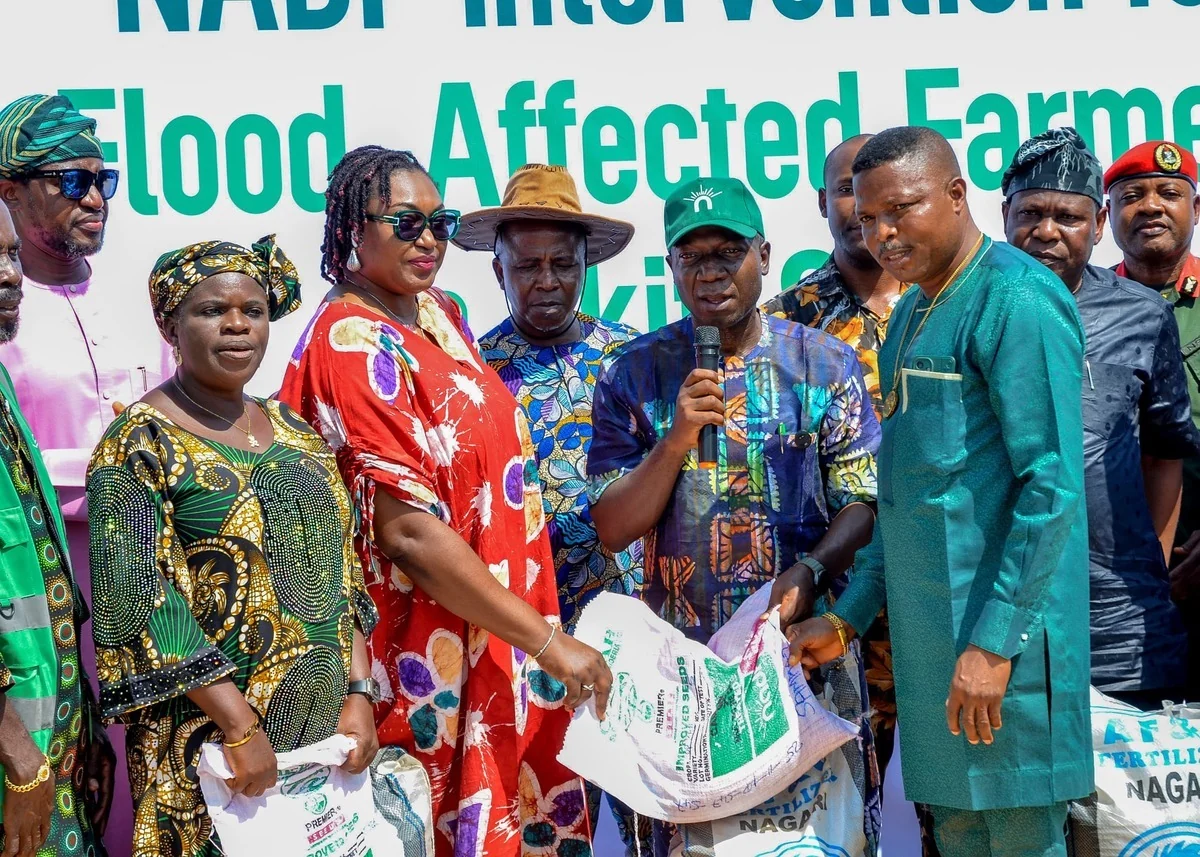
The National Agricultural Development Fund (NADF) has launched an emergency agricultural recovery programme to support over 22,000 smallholder farmers affected by flooding in Ekiti, Akwa Ibom, Kogi, Benue, Bayelsa and Ogun states.
The intervention is designed to help farmers whose crops, farmlands and productive assets were damaged by flooding during the 2026 rainy season return to production.
Speaking at the flag-off ceremony in Ekiti State, the NADF Executive Secretary, Mohammed Ibrahim, who was represented by the Head of Strategy and Planning, Monitoring, Evaluation and Learning, Mrs. Adebanke Fajana, said beneficiaries would receive improved seeds, fertilisers and crop protection products to support their recovery.
He said the intervention was necessary to prevent flood-related losses from undermining farmers’ livelihoods and their ability to prepare for the next planting season.
ALSO READ: NADF trains 1,884 nationwide to boost productivity
“The consequences go beyond lost crops. Farm inputs and infrastructure have been damaged, productive land affected and household incomes threatened. For many farmers, these losses could affect not just this season but their ability to prepare for the next,” Ibrahim said.
He said the programme builds on NADF’s previous emergency interventions, including support for flood-affected onion farmers in Sokoto, Kebbi, Borno and Yobe states, as well as the ginger recovery programme for farmers in Kaduna, Plateau and the Federal Capital Territory following the ginger blight outbreak.
The latest intervention covers six states across three geopolitical zones. While rice farmers in Bayelsa, Akwa Ibom, Benue and Kogi will benefit, farmers in Ekiti and Ogun will receive support for both rice and maize production.
Ibrahim said beneficiaries were selected based on assessments and data verification conducted in collaboration with state governments. He added that the implementation of the programme would be completed within seven weeks.
“Speed is critical in emergency response, but accountability is equally important. Every beneficiary will be properly verified, with a database developed to ensure transparency and effective delivery,” he said.
He said NADF would monitor the distribution of inputs and farm recovery through its digital monitoring system while exploring measures such as agricultural insurance to help farmers manage future climate risks.
“The true measure of success will not be the quantity of inputs delivered, but the farms restored, livelihoods rebuilt and harvests secured,” he said.
The Special Adviser to the Ekiti State Governor on Agriculture and Food Security, Ebenezer Boluwade, described the intervention as timely, saying it would help farmers recover from their losses and restore agricultural production.
He said, “This intervention will go a long way in supporting our farmers, restoring their productive capacity and boosting food production in the state.”
Boluwade assured NADF of the state government’s cooperation and logistical support, urging beneficiaries to use the inputs for their intended purposes.
The Ekiti State Chairman of the All Farmers Association of Nigeria, Adekogbon Sunday Ige, also welcomed the intervention, saying it would ease the hardship of beneficiaries and help them return to their farms.
WATCH TOP VIDEOS FROM NIGERIAN TRIBUNE TV
