Follow THISDAYLIVE on GoogleAdd us as a preferred source to see more of our stories in Google
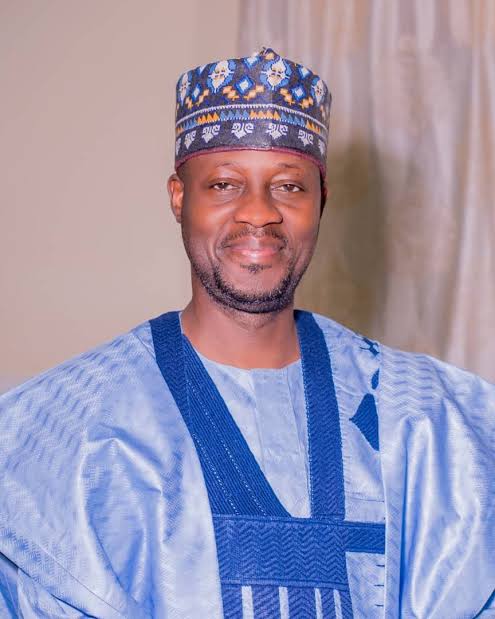
Nigeria Democratic Congress candidate for the February, 2027 gubernatorial poll in Kwara State, Professor Yinka Ajia, in this interview, speaks on President Bola Tinubu government’s economic policies, NDC’s alternative agenda, his political movement from the African Democratic Congress to the NDC, the 2027 governorship election, and the proposed Ilorin light rail project, among other issues. Sunday Aborisade brings excerpts:
How would you assess President Bola Tinubu’s performance in the last three and a half years?
The President and his administration have been an abysmal failure, particularly in addressing Nigerians’ livelihood challenges.
I must acknowledge that the government has made some progress in infrastructure. I believe in giving credit where it is due. However, the manner in which petrol subsidy was removed created an economic shock with devastating consequences.
Household purchasing power has collapsed, while the cost of living has increased astronomically. The President has suggested that Nigerians have gone through the worst period. I respectfully disagree. Families surviving on the N70,000 minimum wage are still struggling with the harsh economic realities.
Transportation is exorbitantly expensive, food prices remain beyond the reach of many households, and essential services have become increasingly unaffordable.
Even when the government celebrates a reduction in food inflation, the critical question is whether Nigerians have the money to buy food. We are not hearing enough about affordability. This administration has made the average Nigerian poorer.
What would the NDC do differently if it takes over the federal government in 2027?
Our approach will revolve around improving the welfare of ordinary Nigerians. Under a Peter Obi-led administration, every policy must answer a fundamental question: Can Nigerians afford food, medicine, shelter and transportation?
We must also stop criminalizing the word subsidy. What matters is whether subsidies are responsibly administered and directed towards improving human welfare.
As an economist, I will insist on sound policy choices. If Peter Obi becomes President and introduces an anti-people policy similar to what the Tinubu administration has implemented, I will challenge it. We will not allow the NDC to become another APC.
Every policy must pass a human-welfare test. If it cannot improve citizens’ material conditions, we must reconsider it. We can provide appropriate subsidies while tackling corruption through institutional reforms.
But President Tinubu argued that the subsidy regime was riddled with corruption. What alternative would you have adopted?
The problem was not simply the existence of subsidies but the corruption associated with their administration. Unfortunately, the President’s approach exposed the economy to serious risks.
Interestingly, wealthy Nigerians continue to benefit from government interventions through bailouts. Nigeria has a history of rescuing individuals whose financial activities contributed to the near-collapse of the banking system in 2009.
The government reportedly provided a N5.5 trillion bailout, benefiting a relatively small group of about 350 Nigerians, as recently highlighted by former Vice President Yemi Osinbajo.
Yet ordinary Nigerians are being asked to endure unprecedented hardship because the subsidy system was mismanaged. Government cannot continue protecting privileged interests while imposing unbearable sacrifices on the majority.
The federal government says subsidy savings have been transferred to states. How would you ensure such funds benefit Kwarans?
The President did not establish a sufficiently clear framework to ensure that the money transferred to states translated into measurable improvements in people’s lives.
What we need are funded mandates. Rather than merely transferring money to states, the federal government should attach specific responsibilities and measurable objectives to the funds.
For instance, a state receiving N100 billion could be directed to dedicate a defined portion to transportation to ease mobility pressures, with monitoring mechanisms to prevent diversion.
The important question is whether these transfers have reduced transportation costs. Kaduna State provides an example worth examining through its mass transit arrangements, which allow civil servants and other residents to use buses free of charge during certain periods.
An efficient public transportation system should be available so that citizens are not compelled to own private vehicles.
Today, Nigerians are reducing food consumption and walking portions of their journeys because they cannot afford transportation. The government cannot continually demand sacrifices from citizens who have already sacrificed so much.
Would that same standard apply to your government in Kwara State?
Absolutely. Every policy we introduce must improve the material conditions of ordinary citizens. That is the standard by which Kwarans should hold us accountable and by which we will judge ourselves.
Q – You have criticized President Tinubu’s handling of Nigeria’s religious and ethnic differences. Why are you that concerned?
A – I am concerned about the politicization of Nigeria’s religious and ethnic differences. In a country where citizens have legitimate concerns about fairness, representation and security, presidential decisions should strengthen national unity rather than deepen suspicion.
Appointments, resource distribution and responses to insecurity must reflect fairness. No family seeking protection should wonder whether its religion or ethnicity will determine how urgently government responds.
The President must move away from divisive politics and use his office to unite communities. Elections will pass, but Nigerians must continue living and working together.
Why should voters interpret your movement from ADC to NDC as conviction rather than political convenience?
Let me correct the record. I never aspired to occupy any political office under the APC. I was the governorship candidate of the Abundant Nigeria Renewal Party (ANRP) in the 2018/2019 electoral cycle. I have contested the Kwara governorship only once.
Our movement from ADC to NDC followed a considered assessment of the legal challenges confronting the ADC. After consultations with our national leaders, including Peter Obi and Rabiu Kwankwaso, we concluded that a more stable platform would better serve our pro-poor policy objectives.
My convictions have remained consistent: stronger institutions, productive employment, accessible public services and accountable government.
What is different about your political structure this time?
ANRP was reform-minded, but we struggled to raise the resources needed to make our ideas competitive.
Today, we have greater resources, a stronger platform and a wider audience. We are organizing through senatorial, local government and ward structures, with teams across all 193 wards.
However, structures on paper are insufficient. Our teams are engaging residents, explaining our agenda, listening to their concerns and sustaining relationships with communities across Kwara.
Is the NDC united enough to challenge the APC and PDP in Kwara?
Yes. Disagreements occur in political parties, just as they do in families. What matters is resolving them through recognized party processes, mutual respect and shared commitment. Our internal differences must not distract us from the needs of Kwarans.
What is your realistic path to victory, and would you consider alliances?
I believe I am the better-prepared candidate. After eight years of APC government, Kwarans are entitled to ask whether promises have translated into safer communities, better livelihoods and dependable public services.
Our strategy is to present a credible alternative and organize across the state. We are open to alliances with parties and individuals committed to our Forward Kwara Agenda. Such partnerships must be based on shared priorities, including security, employment, education, healthcare, infrastructure, energy and accountable governance.
But let me be clear, we are not stepping down for any other candidate. We believe that what we are offering to Kwarans is superior to what the others are offering, because of this, our expectation is that they will support us in delivering on the Forward Kwara Agenda.
Your proposed Ilorin light rail project has attracted attention. How much will it cost, and how will you finance it?
A – Our objective is to provide safer and more dependable mass transportation rather than allow residents to remain excessively dependent on commercial motorcycles, popularly known as okada.
For the proposed Ilorin light rail, $425 million represents the maximum borrowing exposure we have discussed. It is neither a final construction cost nor an amount we must necessarily spend.
The proposal envisages a scaled, connected transportation system, with Post Office and Oja Oba as important hubs within a wider mass transit programme.
We will explore development financing, taking the state’s repayment capacity into consideration. Engineering requirements, operating expenses, financing conditions and maintenance costs must guide the project.
We must also consider the livelihoods of existing transport operators as we transition towards a safer and more organized transportation system.
Your 25-point delivery compact describes all commitments as non-negotiable. What happens if your administration fails to meet its targets?
All 25 commitments are non-negotiable. Each will have an accountable lead, measurable milestones and clearly identified resources.
We will introduce a quarterly public performance dashboard using green, yellow and red ratings to communicate implementation progress.
A red rating must trigger an honest explanation and a recovery plan. We must establish whether delays resulted from inadequate funding, equipment, personnel, training or coordination.
Government must provide the necessary tools before demanding results. Where training and performance improvement measures fail, appropriate consequences must follow through established procedures.
The dashboard will also hold me accountable as governor.
You have alleged political interference in KWASSIP. What evidence do you have?
A – I have received confidential information alleging that funds administered through KWASSIP may have been used for political purposes. These reports warrant independent examination, but allegations are not established findings of wrongdoing.
I have called on the state government to commission an independent audit. The Director-General’s denial should also be considered, but an independent examination would provide a stronger basis for public confidence.
Within my first week as governor, I will commission an audit covering allocations, beneficiary selection, payment records, administrative expenditure and compliance with the programme’s authorized purposes.
Any findings will be handled through due process. The same accountability standards will apply to programmes under my administration.
How would you increase internally generated revenue without driving businesses away?
Our approach is to expand the productive economy and broaden the tax base while making compliance clearer and fairer.
The Forward Kwara Agenda provides for reviewing duplicative and unauthorized charges, simplifying government approvals, improving land-title processing and supporting businesses and productive infrastructure.
Businesses must understand the legal basis of every charge and have opportunities to challenge incorrect assessments.
Enforcement must follow the law. Where liabilities are disputed, we will prioritize engagement, independent review and reasonable payment arrangements. Closing businesses should be a last resort.
We will also propose incentives, within the state’s authority, for private employers participating in our graduate employment programme, tied to verified employment outcomes.
How would you address concerns about the treatment of non-indigenes and the argument that the governorship should go to Kwara North?
My position on non-indigenes is based on fairness and the protection of livelihoods. People described as non-indigenes are part of Kwara’s social and economic fabric. They raise families, employ workers, trade and invest here. Nobody should feel unwelcome or inferior.
Everyone must meet lawful obligations, but everyone also deserves fair treatment without ethnic or political intimidation.
On zoning, I understand the importance of representation and the concerns behind the argument for Kwara North. However, representation must also be considered alongside competence, stewardship and equitable development.
The argument for any candidate, including Speaker Danladi, should not rest solely on his geographical origin. He should also explain what his leadership has delivered for Kwarans, particularly the people of Kwara North.
My commitment to Kwara North, South and Central is a government that guarantees fairness, inclusion and equitable distribution of opportunities and public resources.
