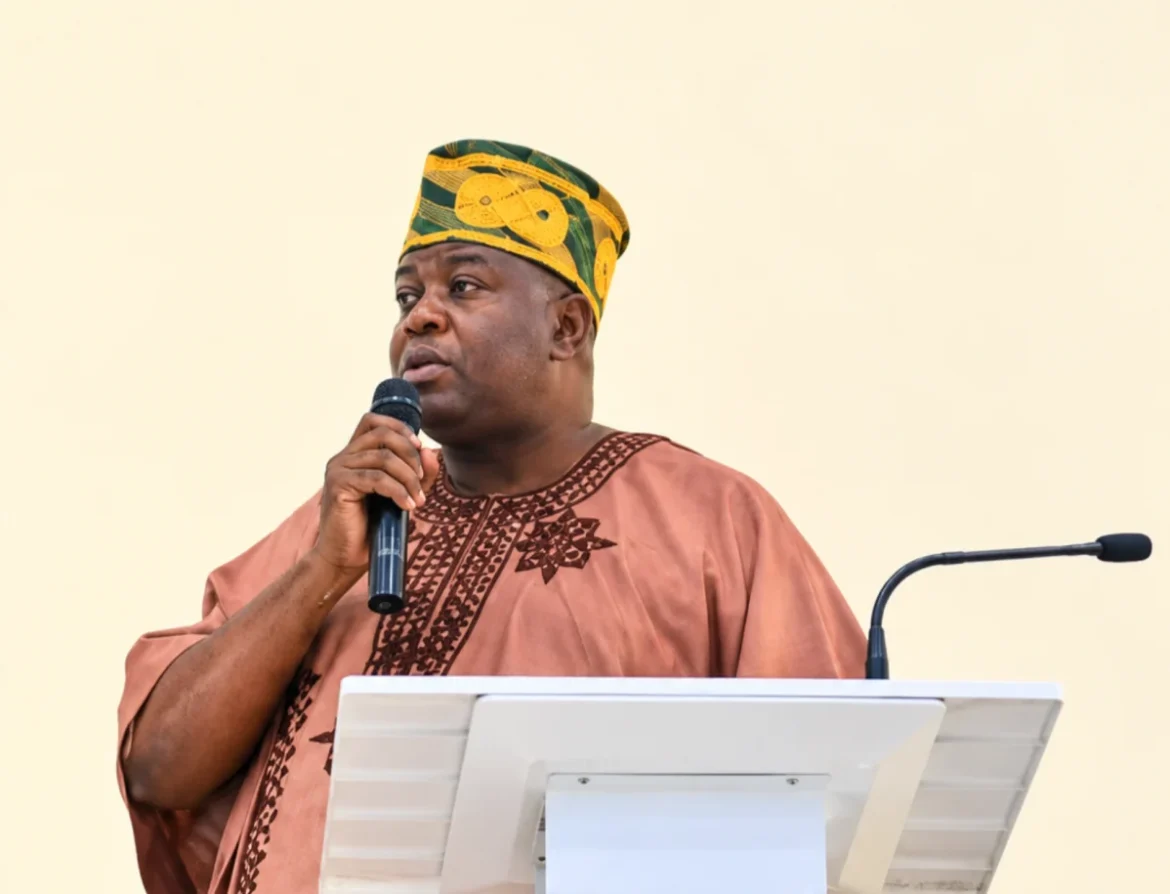
The Chairman of the Police Community Relations Committee (PCRC), Alhaji Mogaji Ibraheem Olaniyan, has thrown the weight of the Committee behind the establishment of state police, describing it as a timely intervention that will strengthen Nigeria’s security architecture and bring policing closer to the people.
Olaniyan, who spoke in an interview with Tribune Online in Abuja, said the current Inspector-General of Police, IGP Olatunji Rilwan Disu, had demonstrated a clear understanding of community policing and the need to involve citizens in addressing the country’s security challenges.
He noted that Disu’s support for state police represented a significant departure from the previous position of the Nigeria Police Force, which had largely opposed the proposal.
According to him, the IGP’s professional experience and exposure to community-based security initiatives had shaped his understanding of the role citizens could play in maintaining law and order.
“When IGP Disu came on board, he brought a different perspective to the discussion. Based on his experience and exposure, he agreed that Nigeria could operate a federal police system alongside state police,” he said.
Olaniyan recalled that Disu had worked with vigilante groups, environmental marshals and other community-based organisations during his tenure as commander of the Rapid Response Squad in Lagos, giving him practical insight into the contributions of grassroots security structures.
He also attributed the IGP’s disposition towards community policing to his early exposure to the PCRC, noting that his father was among those involved in community security initiatives in Lagos and the formation of the committee.
The PCRC chairman, however, cautioned that adequate constitutional and institutional safeguards must be established to prevent state governors from using state police to intimidate political opponents or settle political scores.
He said the committee had submitted a position paper supporting state police because of its potential to improve intelligence gathering, strengthen grassroots security and facilitate quicker responses to threats.
“That is one of the grey areas we have consistently identified, and I believe it must be properly addressed before state police becomes operational,” he said.
“We must ensure that state police serve the people and not the political interests of those in government. The police must remain an institution for protecting lives and property, regardless of political affiliation.”
Olaniyan expressed confidence that state police would work effectively under appropriate federal supervision and constitutional safeguards, citing what he described as the professional conduct of police officers during recent electoral activities, including the Ekiti State election.
He said he personally led PCRC national observers to monitor the activities of police personnel during the off-cycle elections conducted in the recent past and expressed satisfaction with the conduct of the officers.
“What we witnessed was a police force that conducted its operations with decorum and under clear professional instructions. The police did not conduct themselves as an instrument of any political party, including the ruling party,” he said.
He commended the Federal Government for supporting the state police initiative and expressed optimism that the proposed reform would strengthen security across the country.
He urged President Bola Ahmed Tinubu to assent to the bill as passed by the National Assembly without further delay, in the national interest.
On the reported decline in cases of mass abductions in schools, the PCRC chairman attributed the development to IGP Disu’s emphasis on community intelligence and collaboration with grassroots organisations.
He disclosed that the IGP had inaugurated the PCRC National Safe School Initiative, mandating the committee to mobilise its nationwide membership to strengthen security around public and private schools.
According to him, the initiative is designed to encourage residents, traditional rulers, parents, teachers and other stakeholders to take responsibility for protecting schools within their communities.
He explained that the committee had intensified its sensitisation and mobilisation activities during the ongoing school holiday, engaging community stakeholders and Parents-Teachers Associations on the need to identify and report suspicious movements around educational institutions.
“Today, you will find PCRC members in their uniforms carrying out assignments within their communities. We are mobilising our members nationwide to take responsibility for monitoring the security environment around schools and promptly reporting suspicious activities to the appropriate authorities,” he said.
“Our schools are now no-go areas for bandits to operate as they used to because of our presence.”
Beyond sensitisation and community surveillance, Olaniyan said the PCRC had commenced the provision and installation of closed-circuit television (CCTV) cameras in vulnerable schools, particularly those located in remote areas and on the outskirts of communities.
He said the intervention was intended to improve security monitoring, discourage potential intruders and provide useful information to security agencies whenever incidents occurred.
The chairman also disclosed that the Federal Ministry of Education had contacted the committee to commend its efforts and expressed readiness to partner with it on the initiative.
On funding, Olaniyan said the PCRC was currently implementing the programme through its own commitment and resources without receiving financial support from the Federal Government.
He explained that the committee was leveraging its extensive grassroots network to complement the efforts of government agencies responsible for school security.
“We are talking about mobilising thousands of PCRC members across the country to support the protection of schools. These are people who live within the communities, understand their environments and can easily identify developments that may threaten public safety,” he said.
Olaniyan further praised Disu’s leadership style, describing him as a people-oriented police officer whose open-door policy had encouraged greater collaboration between the police and community-based organisations.
He said the IGP understood that the police could not effectively secure the country without the active participation of citizens.
“The police cannot be everywhere at the same time, but the people are everywhere. When you bring the people together, encourage them to share intelligence and establish a strong relationship with the police, security becomes more effective,” he said.
He urged Nigerians to embrace collective responsibility for security, stressing that sustained cooperation between citizens and law enforcement agencies remained essential to building a safer country.
WATCH TOP VIDEOS FROM NIGERIAN TRIBUNE TV