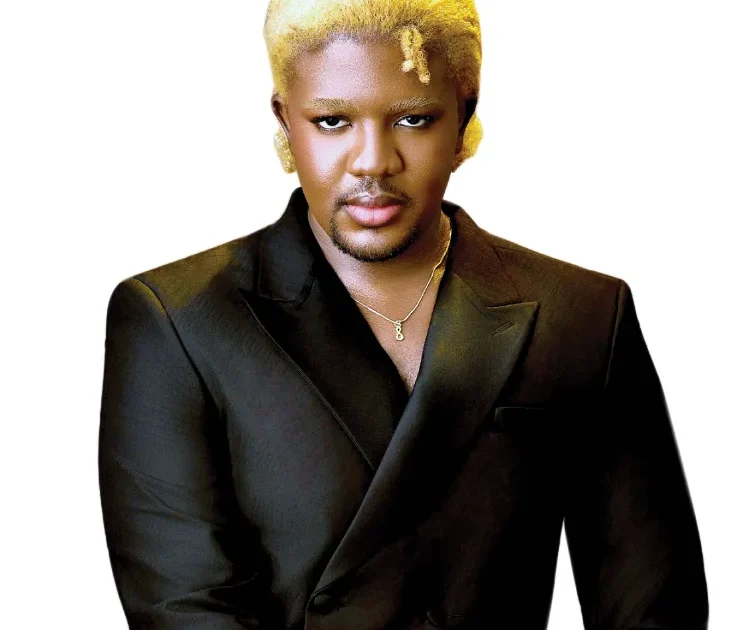
Dieko Afolayan, son of Nollywood filmmaker and producer Kunle Afolayan, who recently opened up about his struggles with bullying, sexual assault and multiple suicide attempts, speaks to VERA ALKALI about his healing, among other things
You spoke deeply about some personal experiences on the Morayo Show. Did you ever feel that those closest to you failed to recognise how much you were hurting?
I think one of the difficult things about experiencing emotional pain is that you can become very good at hiding it. Sometimes, people see you functioning, laughing, showing up and going about your everyday life, and they assume that everything is fine.
There were moments when I wished people could see beyond what I was presenting to the world. But I’ve also come to understand that people cannot always recognise what you haven’t found the courage or the language to communicate.
I think this is why emotional awareness is so important. Sometimes, people don’t necessarily need you to have all the answers. They just need you to notice them, check in and create an environment where they feel safe enough to speak.
After your assault experience, did you struggle to trust people again?
I think experiences like that can change how you perceive safety, relationships and even your interactions with other people.
For me, it was important to understand that what happened to me was not a reflection of everybody I would encounter in life. I didn’t want someone else’s actions to determine how I would experience every other relationship.
Trust is something that takes time, and I’ve had to learn that it’s okay to have boundaries, take my time with people and be intentional about who I allow into my personal space.
Did you ever blame yourself for what happened to you?
I think when someone experiences something traumatic, they can spend a lot of time trying to make sense of it. Sometimes, that process comes with questions about what they could have done differently.
But one thing I’ve had to understand, and something I would want anyone listening to understand, is that responsibility belongs to the person who chose to cause harm.
I was not responsible for what happened to me. And I think it’s important that survivors understand that they don’t have to carry the shame of something someone else did to them.
Have you ever confronted anyone who contributed to your traumatic experiences?
I think confrontation can mean different things to different people. Sometimes, we imagine that healing requires us to sit across from the people who hurt us and demand answers or an apology.
But I’ve learnt that my healing cannot depend on somebody else’s willingness to acknowledge what they did.
There are things you may never receive an explanation for, and there are conversations you may never get to have. That doesn’t mean you cannot move forward.
For me, the priority has been reclaiming my peace and understanding that I deserve a life that isn’t permanently defined by what happened to me.
Since opening up publicly, have you received any backlash or been treated differently?
Absolutely. I think the Internet can be a very interesting place because people sometimes feel entitled to an opinion about experiences they know very little about.
I’ve experienced both support and criticism. And while I appreciate the people who have found the courage to share their own experiences with me, I’ve also had to learn not to internalise every opinion that comes with being visible.
I also understand that when you share something personal, you cannot entirely control how people interpret it. But I’ve become more intentional about what I share, why I share it and what I want people to take away from it.
I don’t want my life to become a constant conversation about the things I’ve survived. I want people to see the things I’m building, the person I’m becoming and the work I’m doing.
Have you genuinely healed, or have you simply learnt how to live with the pain?
I think healing is often misunderstood as reaching a point where nothing hurts anymore.
I don’t necessarily think healing means forgetting what happened or pretending that certain experiences didn’t shape you. I think it means reaching a place where those experiences no longer have the same control over your decisions, your relationships or how you see yourself.
I’m still growing. I’m still learning. And I think there is something beautiful about being able to acknowledge that without feeling like you’ve failed.
I don’t want to present myself as someone who has figured everything out. I’m human, and I’m allowed to have difficult days. But I’m also very conscious of the life I’m building beyond those experiences.
Do you sometimes regret making such personal experiences public?
I wouldn’t say I regret speaking about my experiences because I understand that somebody else might need to hear that they are not alone.
However, I’ve also learnt that sharing your story doesn’t mean surrendering your privacy.
There is a difference between being authentic and making every part of your life accessible to the public. I’ve become more intentional about that distinction.
I want to be able to tell my story on my own terms, at my own pace and in ways that serve a purpose. I don’t believe that vulnerability should come at the expense of your personal boundaries.
What would you say to parents who dismiss their children’s emotional struggles as attention-seeking or childish behaviour?
I would say that children don’t always have the emotional vocabulary to explain what they’re experiencing.
Sometimes, what looks like rebellion, withdrawal, anger or attention-seeking could actually be a child trying to communicate something they don’t know how to express.
I think parents need to understand that providing for a child physically is important, but emotional availability matters just as much.
You don’t have to understand everything your child is experiencing to make them feel heard. Sometimes, you simply need to listen without immediately correcting, dismissing or judging them.
And I think we need to move away from the idea that children should only be taken seriously when their struggles become visible or extreme.
A child shouldn’t have to reach a breaking point before somebody takes their feelings seriously.