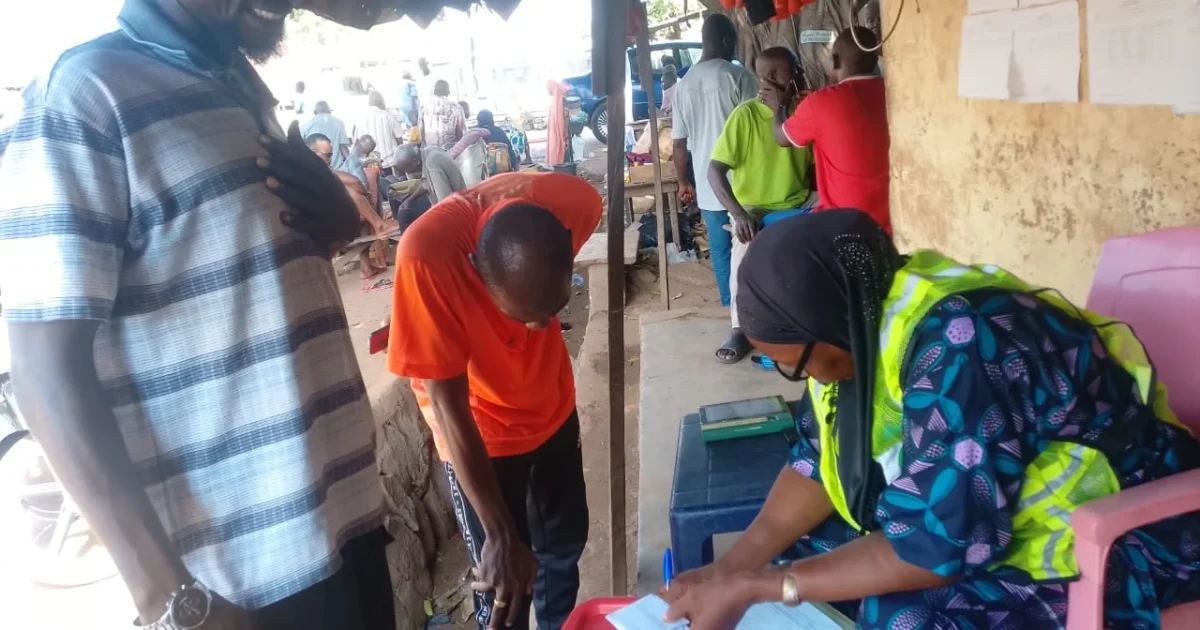
The mock accreditation exercise conducted by the Independent National Electoral Commission in Kano and Benue states on Saturday was generally peaceful and hitch-free, while low voter turnout and location-related concerns were reported in parts of Delta State.
The exercise, organised to test the effectiveness of the Bimodal Voter Accreditation System and other electoral arrangements ahead of the 2027 general elections, recorded varying levels of participation in the three states.
In Kano, the exercise was conducted in 20 selected polling units across the 10 wards of Tarauni Local Government Area, with two polling units designated in each ward.
A PUNCH correspondent who visited some of the designated polling units in Unguwar Gano, Gyadi-Gyadi South and Gyadi-Gyadi North wards reported that accreditation began at about 9am and proceeded peacefully.
Eligible members of the public were seen participating in the exercise, while accreditation and other electoral procedures were carried out in line with the commission’s guidelines.
The Head of INEC Office in Tarauni Local Government Area, Abubakar Yusuf, described the exercise as peaceful and without challenges.
“The mock election was progressing smoothly and peacefully without any reported challenges across the 10 wards as of the time of my visits,” he said.
He urged residents to continue complying with the commission’s rules and regulations to ensure the success of the exercise.
Yusuf explained that the mock election was part of INEC’s preparations to test the effectiveness and functionality of its electoral equipment ahead of the general elections.
Some participants also expressed satisfaction with the accreditation process, saying they were successfully accredited with the electoral device without difficulties.
One of the participants in Unguwar Gano Ward, Aisha Baffa, said, “Though it’s meant to test the effectiveness of the electoral process, one can say it’s a commendable exercise.”
Baffa urged the commission to ensure early deployment of personnel and election materials during the general elections to reduce the time voters spend waiting.
In Benue State, the exercise was also hitch-free but recorded low turnout at the polling units visited by a PUNCH correspondent.
The mock exercise was conducted at selected polling units across the state’s 23 local government areas to test the functionality of the BVAS ahead of the 2027 general elections.
At Madikpo Tokunbo Market Polling Unit in Central South Mission Ward, Makurdi Local Government Area, only 11 out of 754 registered voters participated in the exercise.
An INEC official at the polling unit, Mrs Salamatu Idris, confirmed that 11 voters were accredited, describing the exercise as successful and saying the BVAS functioned properly throughout the accreditation and voting process.
She said, “We have done the exercise successfully and without any problem. We are making efforts to encourage people to turn out.”
Idris explained that voters were expected to have their names checked on the register and their Permanent Voter Cards verified to establish that they belonged to the polling unit.
She said that after their details were confirmed, officials would enter their six-digit identification numbers into the BVAS device, which would display their photographs for facial verification before their fingerprints were captured for accreditation.
Responding to complaints by some residents who said their names were missing from the voter register at the polling unit, Idris explained that some of them had registered late and were yet to receive their PVCs.
She said, “They registered late in June and July. They were given printouts to make photocopy. Their card would be ready and be given to them soon.”
Idris said the commission would distribute PVCs from December 1 to 7, while the final register would capture the names of eligible voters.
She advised those who had registered to take advantage of the collection exercise to obtain their PVCs, expressing hope that voter turnout would improve during the general elections.
A similar situation was observed at LGEA Primary School Wurukum Polling Unit, 07-13-11-006, in Wailomayo Ward, where only six out of 833 registered voters were accredited.
The INEC official at the polling unit, Tersoo Andor, acknowledged the low turnout but said the accreditation and voting process was seamless for the six people who participated.
He expressed confidence that the BVAS would function optimally during the 2027 general elections.
At Mbajuku One Polling Unit in Agan Ward, Makurdi LGA, only three voters had turned up for the exercise, which began at about 8:30am, as of the time of the correspondent’s visit.
The Assistant Presiding Officer, Tamen Theophilus, said it took less than a minute to capture and process each voter before the person proceeded to cast a ballot in the mock exercise.
He said accreditation and voter capture had been smooth and fast, adding that the results would be uploaded to the INEC Result Viewing Portal at the close of the exercise by 2:30pm.
The INEC Public Relations Officer in Benue State, Peace Ogoyi, told journalists that the Resident Electoral Commissioner, Mallam Aminu Idris, and members of the commission’s management were monitoring the exercise in Otukpo Local Government Area, Benue South Senatorial District.
In Delta State, however, the exercise recorded low voter turnout in some locations in Asaba, while no electoral officials were sighted at another venue visited by a PUNCH correspondent.
At Uzoigwe Primary School in Oshimili South Local Government Area, only a few voters turned up, although INEC officials were present.
The situation was different at Government Model Secondary School, GRA, Asaba, where no INEC officials were sighted during a visit.
Although the school was not publicly listed by name as a designated centre for the exercise, a trade fair was ongoing at the venue, raising questions about whether it was intended to serve as one of the locations for the mock election.
A visit to other polling locations in Asaba showed varying levels of participation, with low turnout recorded at Zappa Primary School, Asagba Primary School and Ogwa Umuolor polling units.
The Chairman of the All Progressives Congress in Ward 07, Oshimili South, Okocha Patrick, attributed the low turnout at his polling unit partly to changes in the designated voting location shortly before the exercise.
He said the polling unit was initially scheduled to be Unit 23 but was changed to Unit 1, leaving party officials with little time to inform voters.
“We are just starting, and as you can see, the INEC officials are here, but the turnout is very low because of the changes they made yesterday,” Patrick said.
He added, “We had already sensitised people from Unit 23, and the news came late yesterday. We now have to start afresh in sensitising people from Unit 1.”
Patrick also blamed the poor participation partly on confusion surrounding the environmental sanitation exercise, saying some residents might have assumed that the mock election would not hold.
Despite the challenges, he commended INEC for organising the exercise, describing it as an opportunity to test electoral equipment before the actual election.
“The truth is that it is a good initiative for INEC to bring up this kind of mock election. At least, it will enable them to test the materials and know whether they are effective so that on election day, people will not be stranded or frustrated,” he said.
A relatively better turnout was recorded at Ahon Primary School, Asaba, where participants expressed satisfaction with the commencement of the exercise and the performance of the electoral equipment.
A woman leader, Kanwulia Omoko, said the exercise started on time and that the equipment was functioning properly.
“The turnout is impressive, and the mock election is going on well. The machine is functioning; the people and INEC officials came on time,” she said.
Omoko said the exercise would enable INEC to identify and correct possible lapses before the general election.
“They are trying to achieve the success of the election. If there are any lapses, they can correct them before the actual election,” she added.
Efforts to reach the Delta State Resident Electoral Commissioner for clarification on whether Government Model Secondary School was among the locations intended for the mock exercise were unsuccessful, as the reporter could not obtain his telephone number as of the time of filing the report.
