By Stella Odueme
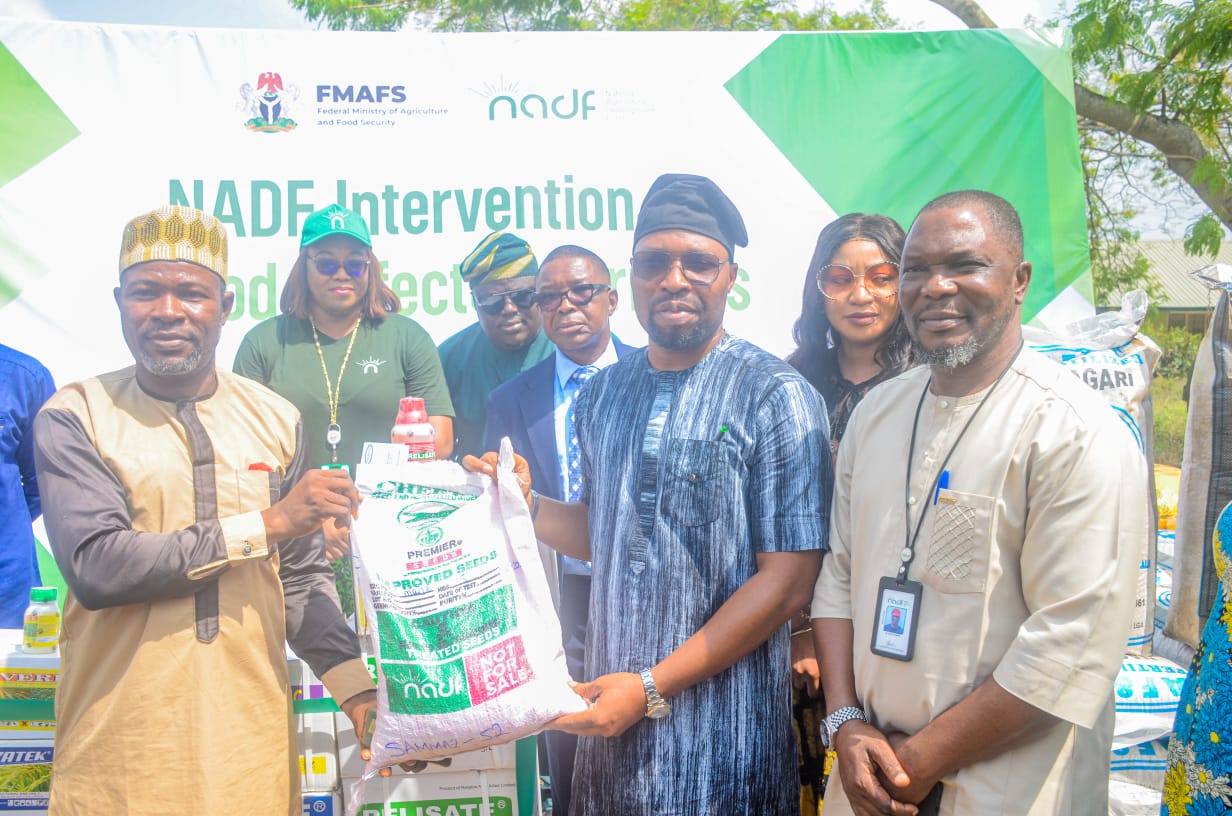
The National Agricultural Development Fund (NADF) has provided emergency agricultural inputs to 4,000 smallholder farmers affected by the 2026 rainy season floods in Ogun State to help them recover from losses and resume farming activities.
The beneficiaries include 2,800 maize farmers and 1,200 rice farmers, who are receiving fertilisers, herbicides and pesticides under the Fund’s Agricultural Emergency Intervention in Enterprise Recovery for Flood-Affected Smallholder Farmers.
Speaking during the flag-off of the intervention in Ogun State, the Executive Secretary and Chief Executive Officer of NADF, Mr Mohammed Ibrahim, represented by the Head of Mechanisation Unit, Mr Olakunle Dabiri, said the initiative was aimed at restoring damaged farms, rebuilding livelihoods and preventing further disruptions to agricultural production.
According to a statement on Monday, he said the intervention reflected the Fund’s commitment to strengthening agricultural resilience and supporting the Federal Government’s food security agenda under President Bola Tinubu’s Renewed Hope Agenda.
Ibrahim noted that the floods had destroyed farmlands, damaged agricultural assets and threatened farmers’ incomes, making immediate assistance necessary to prevent prolonged setbacks in food production.
He explained that the programme was designed around three key areas: needs assessment and data verification, emergency distribution of farm inputs, and climate-smart recovery measures.
According to him, the needs assessment was conducted in collaboration with state governments to identify affected farmers, establish the extent of losses and ensure that only verified beneficiaries received assistance.
He added that NADF would also strengthen agricultural extension services, early-warning systems and capacity-building programmes to improve farmers’ preparedness for future climate-related disasters.
The NADF chief executive assured that transparency and accountability would guide the exercise, adding that the Fund’s digital monitoring and evaluation system would be used to track input distribution and measure the progress of agricultural recovery.
He said the intervention was expected to be completed within seven weeks, stressing that timely delivery of farm inputs was essential to enable farmers to take advantage of available planting opportunities.
Ibrahim urged beneficiaries to use the inputs judiciously and embrace climate-smart farming practices, noting that the real success of the programme would be reflected in restored farmlands, improved livelihoods and secured harvests.
In his remarks, the Ogun State Commissioner for Agriculture, Hon. Bolu Omotowo, applauded NADF for its continued interventions in the state’s agricultural sector.
He said the support complemented the agricultural development efforts of Governor Dapo Abiodun, particularly in improving farmers’ access to inputs, equipment and mechanisation services.
Omotowo recalled that NADF had distributed more than 20,000 bags of fertiliser to farmers in the state about four months earlier to support the planting season.
He also disclosed that the state government had supplied eight tractors to its eight farm settlements, alongside tipping trailers, ploughs, harrows, maize planters and cassava planters to promote mechanised agriculture.
According to him, the provision of the equipment would reduce reliance on traditional farming methods, improve productivity and increase food production.
The commissioner, however, called on NADF and other development partners to extend their interventions to additional agricultural commodities, particularly cotton, which is also cultivated in the state.
He assured that the distribution of the emergency farm inputs would be transparent and urged beneficiaries to maximise the opportunity to rebuild their farming businesses.
The intervention is expected to restore the productive capacity of the 4,000 farmers, mitigate the impact of flood-related losses and strengthen food production in Ogun State.
