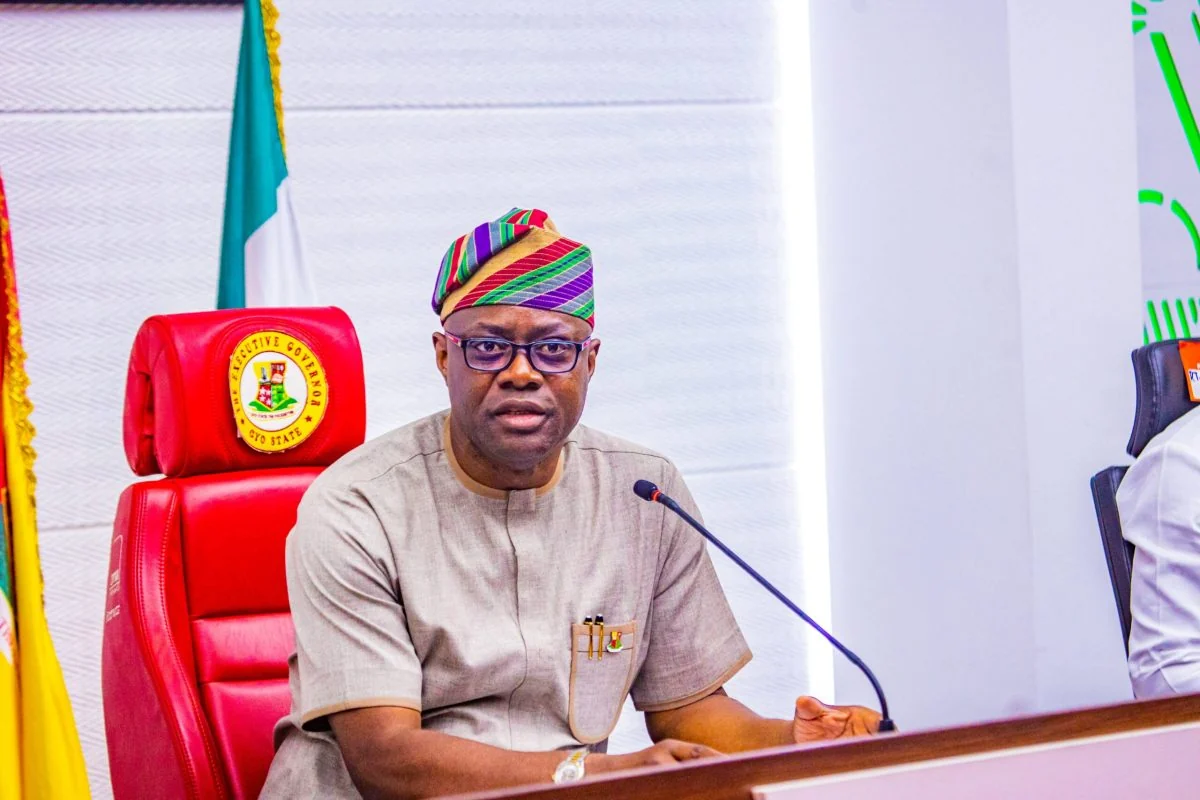
The Presidential Candidate of the Allied Peoples Movement (APM), Engr. Seyi Makinde, has promised to implement true fiscal federalism and give the 36 states and communities across the Federation control over solid mineral resources within their territories if elected President in the January 16, 2027 election, according to the Makinde-Daura Presidential Campaign Organisation (MDPCO).
The organisation said his administration would pursue resource control as a key component of its restructuring agenda, ensuring that states and host communities had greater influence over decisions concerning the exploitation of mineral resources while safeguarding national economic stability.
The MDPCO disclosed this in Abuja on Friday through its Director of Strategic Communications, Mr Richard Ihediwa, while outlining the candidate’s position as contained in the Reset Nigeria Manifesto recently unveiled in Abuja by Makinde, who is also the Governor of Oyo State.
The manifesto, under its vision of a “Federation that Works”, faulted the existing arrangement in which major decisions concerning solid mineral exploitation were made principally by the Federal Government, leaving states and communities with limited influence over activities within their territories.
It noted that although states and host communities bore the consequences of mineral exploitation, including environmental degradation, unsafe storage of hazardous materials, damaged roads, communal conflicts and emergency response responsibilities, they did not enjoy corresponding benefits from the resources.
The organisation, quoting the manifesto, stated, “To Reset this anomaly, the Makinde government will, upon election, initiate a national conversation on restructuring and resource control.”
It added, “Nigeria must examine how greater responsibility for natural resources can be transferred to states, how communities that bear the consequences of resource exploitation can receive a fairer share of the benefits, and how such changes can be implemented without undermining national economic stability.”
The organisation explained that the proposed national conversation would not become another open-ended conference, as a Federal Responsibility Review would be completed within the first year of Makinde’s administration.
According to the manifesto, the review would identify functions that should remain exclusively federal, those requiring national standards but state-level delivery, responsibilities that should principally belong to state or local governments, and functions requiring published intergovernmental agreements.
It said the review would also produce specific constitutional amendments, legislation, fiscal changes and transition arrangements to give effect to the proposed restructuring.
The manifesto further promised to strengthen cooperation between federal and state regulatory authorities, establish publicly accessible registers of mining licences and beneficial ownership, and introduce clearer mechanisms for monitoring compliance and tackling dangerous and illegal mining activities.
On the proposed licensing arrangement, it stated, “The Federal Government continues to issue mining licences under the existing constitutional framework, state governments will be formally involved in the licensing process, with opportunities to review applications, raise concerns about land use, environmental protection, community interests and public safety.”
The organisation said the arrangement would address restrictions, youth restiveness, government-community clashes, conflicts among communities and indiscriminate exploitation of solid minerals.
It added that the proposed reforms were aimed at guaranteeing socioeconomic stability, shared prosperity and overall national development.
Explaining the broader objective, the manifesto stated that Makinde envisioned a “federation in which states have greater responsibility for developing their economic potentials, communities benefit more directly from the resources around them and national institutions continue to protect the interest of all Nigerians”.
It further stated that the driving ideology of the Reset Nigeria Agenda was the opportunities it created, the jobs it generated and the improvements it delivered in the lives of Nigerians, urging them to turn out en masse on January 16, 2027, to vote the APM candidate into office.
WATCH TOP VIDEOS FROM NIGERIAN TRIBUNE TV
